Make sure you're tying real-time computer vision straight into register logs and shopper behavioral tracking before items walk out the door. When you're sizing up these tools, you must balance local edge response times against everyday store operations and strict privacy regulations.
In high-volume locations, modern software tracks thousands of live camera feeds and register streams together, working way past what human guards can watch.
Noisy alerts quiet down the moment your system pulls camera footage, register receipts, stock tallies, and dock door badges into a single coordinated risk feed.
Within ninety days of deployment, asset protection teams log measurable progress as shrink drops, nuisance alarms fall off, and workers reclaim hundreds of hours previously burned scrubbing tape.
Video analytics and gesture detection
Much like mapping choreography, retail ai vision solutions analyze physical motion paths and product handling across aisles while ignoring individual shopper faces and personal identities.
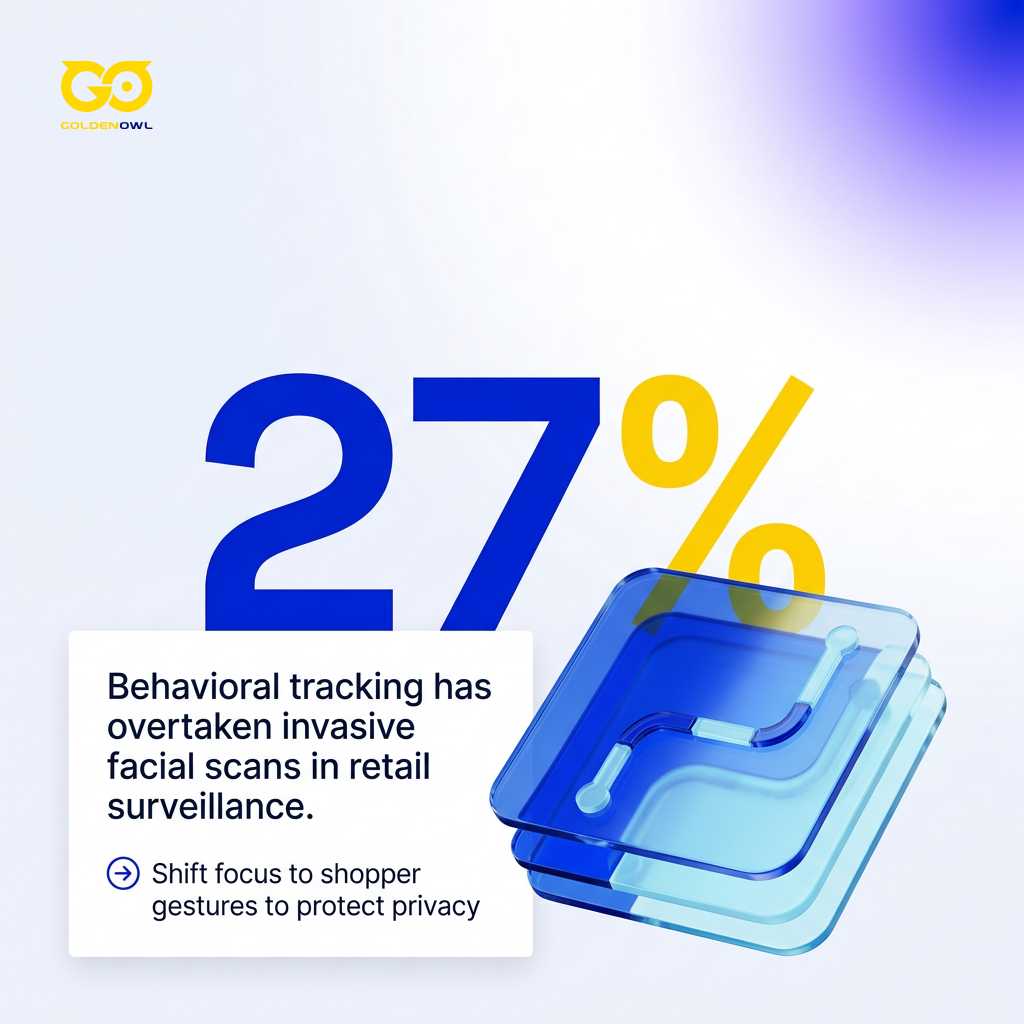
Facial scans take a backseat to behavioral tracking, which now claims 27% of the overall retail vision analytics market. Route instant flags to floor staff whenever cameras catch someone sweeping entire display pegs or shoving merchandise under their clothes. Pushing five-second clips straight to handheld devices lets your workers step in with friendly customer service long before that shopper reaches the exit.
Floor layouts and exterior doors stay under direct visual review to catch obvious stuffing techniques, bulk shelf-sweeps, and organized retail crime runs.
By running frame-by-frame motion models, vision software flags physical theft actions, trip hazards, and register bottlenecks while stripping out the endless false pings typical of old infrared sensors. System precision climbs higher every week as the software maps the daily traffic rhythms of your specific footprint.
Certain actions demand an instant response: slipping goods into a coat, clearing an entire peg hook, or stalling around locked fragrance cabinets. The moment cameras spot these body motions, floor associates get a short video clip on their phones, so they can walk over and offer assistance before items walk out.
Self-checkout fraud prevention
How can stores secure modern self-checkout lanes without ruining the customer experience? The answer requires a tight combination of overhead computer vision, scale data, and customer gesture tracking to uncover barcode covers, swapped tags, and items passed around scanners. Mount ceiling cameras right above each register and check items against visual catalogs of millions of products, hitting 96%-plus identification accuracy while verifying each item in under 300 milliseconds. During an initial six months, test stores see shrink fall by an average of 37% per lane, while full rollouts lock in ongoing annual cuts between 28% and 45%. Better yet, false alert rates stay below 4% even through frantic Saturday rushes.
Vision software correlates active scan records against weight plates and overhead feeds to catch fake bar codes, missed scans, and dishonest customer returns as they happen.
Operators use sweethearting as a catch-all tag for scan avoidance and register theft at front lanes. Watch for unscanned bagging, bypassed scanners, and ribeye steaks rung up as cheap bananas. Smart retailers treat honest scanning blunders and intentional theft identically at the register: freeze the screen, prompt the floor attendant, and let an associate step up to help.
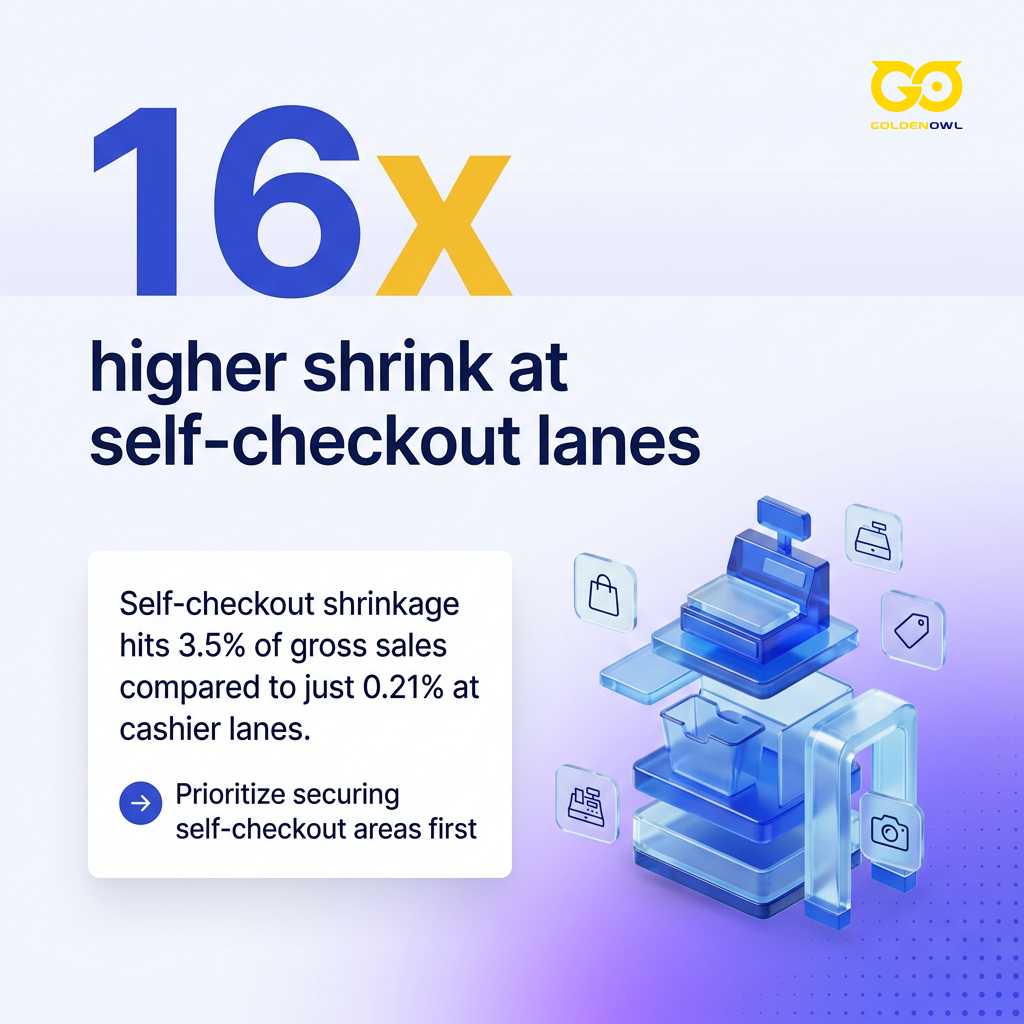
Unmonitored self-checkout areas leak inventory far faster than traditional cashier registers. A 2023 study proved that self-checkout shrinkage hit 3.5% of gross sales versus just 0.21% at cashier lanes, which is a 16× spike in total shrink rate. Hanging an overhead lens over each bagging bay ties physical handling right to the register journal, messaging the attendant in about two seconds with the SKU and a photo whenever goods enter bags unbilled.
Floor employees handle register interruptions through standard customer service workflows that clear up missed items without pointing fingers. Attendants simply offer to run the missed item through the scanner, clear the frozen screen from their handheld pad without drama, and verify the line item registers before letting the customer finish.
Set up sweethearting safeguards whenever self-checkout accounts for more than 25% of your customer volume or your unassisted lane shrink exceeds 1.5% of net sales. The rapid, proven payback makes checkout fraud detection the best opening move for any modern loss prevention strategy.
Point-of-sale exception analysis
A direct feed from register cameras into sales logs builds an automated exception engine that flags strange cashier behavior on the spot, isolating massive line voids, endless customer returns, or till drawers kicked open while nobody is standing at the checkout lane.
To recover cash quickly, smart operators focus on POS exception data, turning suspicious transactions into solid proof in minutes.
Monitoring suspicious register behavior focuses on several telltale till actions:
Linking those events directly to the relevant video
Enabling video-enhanced exception-based reporting (review risk moments, not random footage)
Speeding investigations and improving evidence quality
Loss prevention specialists can pull time-matched video clips for any flagged transaction instantly, pinpointing internal theft schemes in minutes without drowning in hours of dull camera tape.
Internal employee theft monitoring
Suspicious register transactions and digital sales logs feed directly into investigator queues once store cameras link with POS journals. Set your anomaly rules across multiple weeks of operating trends, watching for recurring till shortages and shift-level statistical anomalies rather than pinging store managers over an isolated mistake. Bad accusations destroy team trust and trigger major legal liabilities, so treat automated software flags as investigative starting points rather than reasons to corner an employee.
Auditing register logs catches cash skimming, void abuse, and buddy discounts without forcing staff to comb through paper receipts.
Internal theft ranks as the second-largest driver of retail shrink and demands the most delicate operational handling. Dishonest behavior takes plenty of forms (think phantom returns, unearned staff discounts, void manipulations, fake no-sales, and till dipping). By leaning on electronic register journals, investigators can spot these patterns on paper long before they spend hours hunting for the handoff on camera.
Turn on cashier pattern auditing only when POS reports reveal repeated refund discrepancies, unexplained losses cluster on specific lanes, and your human resources team signs off. Never install secret or unannounced cameras in everyday store work environments.
Access control and back-of-house tracking
At the loading dock, bad pallet tallies and short vendor drop-offs drive process shrink just as quickly as back-door theft. Tie overhead dock cameras straight into your direct-store-delivery manifests to double-check inbound shipments. Within three minutes of unloading, vision tools match delivered cardboard cartons against signed bills of lading.
Smart cameras watching stockrooms and loading bays immediately flag unauthorized visitors and dangerous warehouse floor hazards.
Access control ties back to surveillance video through definite workflows:
Ties badge/door events to footage
Helps investigate tailgating, door props, and after-hours access
Supports internal investigations with clean timelines
Restricting your cameras purely to front checkouts would be reasonable if petty shoplifting drove all your shrink, but back on the loading dock, dropping a single freight pallet represents four figures of inventory loss. Dock monitoring creates zero shopper privacy friction, making receiving bays your easiest testing ground for edge vision.
Video-verified alarm response
Video-verified alarms sharpen dispatch decisions, cut out wasted security patrols, dodge steep municipal false alarm fines, and capture clean evidence right as crimes happen.
Critical system alerts demand rapid verification across specific risk categories:
After-hours intrusions
Back door alarms
Panic/duress events when associate safety is at risk
Coordinated ORC events where response needs clarity fast
Operators verify emergency dispatch needs using targeted software functions:
Pairs alarm or duress events with video context
Helps operators verify whether a dispatch is needed
Preserves pre- and post-event context automatically
Verification platforms standardize alert response across three operational layers:
Automatic camera pull-up on alarm triggers
Clip capture that includes context before the trigger
A standardized runbook for operators (so response is consistent)
Case management and evidence automation
Incident tracking delivers lasting security wins only when isolated video clips funnel into structured case files, cross-store trends, and real procedural changes.
Automated case management software organizes active investigations across four key functions:
Standardizes incident intake and classification
Links evidence (clips, POS events, notes) into a case file
Enables repeat-offender and repeat-tactic tracking
Improves handoffs to HR, legal, and law enforcement partners
Connecting repeat suspect actions across multiple store visits lets retail security units pin down serial shoplifters, outline organized crime rings, and hand organized evidence packets to local police detectives. Packaged evidence files turn messy investigations into speedy convictions.
Implementation strategy
Turnkey vendor platforms
Replacing heavy on-premise recording boxes with cloud-hosted subscription software lets retail operators of any scale turn on enterprise security analytics immediately. You avoid managing dedicated server racks or paying for technician truck rolls whenever models need an update, which cuts down routine IT maintenance across your stores.
Off-the-shelf checkout analytics typically run $80 to $180 per lane every month on subscription. For a supermarket footprint covering 40 storefronts with four automated checkout terminals apiece, recurring software fees on their own devour $154k to $346k annually before accounting for exit portals, cashier lanes, or organized retail crime monitoring.
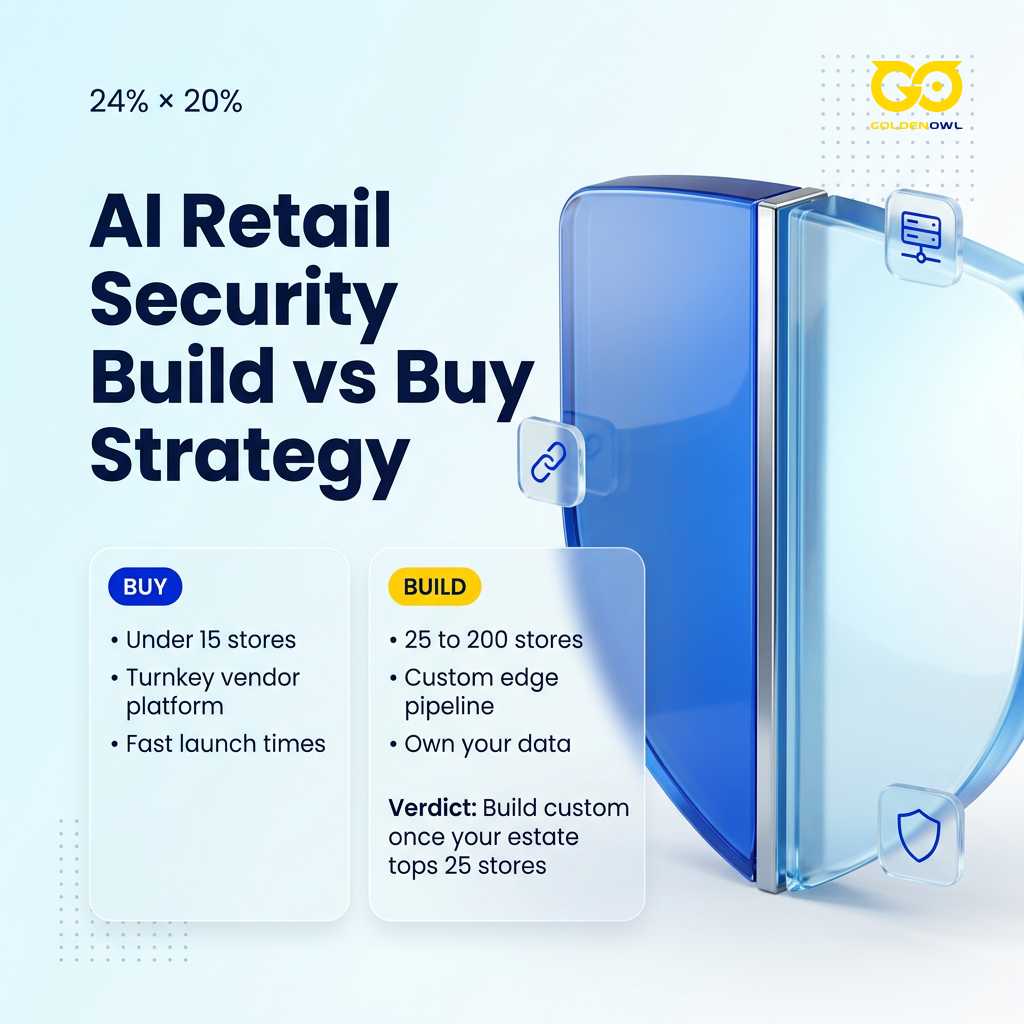
Turnkey AI retail security solutions make the most sense for operators running under 15 stores that need working checkout protection within weeks and can live with locked vendor detection settings.
Everseen
Best for: Tier-1 grocery SCO
Where it wins: Deep sweet-hearting model library, proven at scale
Where it breaks: Per-lane subscription, black-box thresholds
Everseen backs its sweet-hearting detection models with major Tier-1 grocers, having scaled its live checkout footprint across more than 3,500 retail locations by mid-2025.
Sensormatic IQ
Best for: EAS-first apparel & mass
Where it wins: Hardware + analytics in one dashboard
Where it breaks: Heaviest to customise per chain
Sensormatic, running under Johnson Controls, hooks its Sensormatic IQ software directly into physical EAS pedestals at busy storefront doors. Both Checkpoint Systems and Sensormatic keep stacking computer vision over existing EAS and RFID gear, pulling usable shrink data out of older security gates. This approach proves best for EAS-first apparel and mass merchant settings.
NCR Voyix Halo
Best for: Existing NCR estates
Where it wins: Native POS integration, fast start
Where it breaks: Locks you to the NCR stack
NCR Voyix delivers NCR Voyix Halo across its standard checkout registers, running vision models directly on NCR hardware to spot scan discrepancies and flag barcode mismatches as they happen.
Veesion
Best for: Concealment & SCO match
Where it wins: Focused, modern CV, quick pilots
Where it breaks: Narrow scope, still per-lane pricing
Veesion flags suspicious customer gestures and hidden merchandise by layering motion detection across standard overhead cameras to catch theft inside active shopping aisles. This tool is best for concealment and SCO match applications.
Trigo rolled out loss prevention software in June 2025 to match items sitting in physical shopping carts against scanned register receipts.
Plugging video analytics into your existing camera grid lets you spot suspicious customer motion across aisles without buying expensive new sensors. Tapping into installed gear keeps upfront spending down and speeds up deployment across your estate. Pairing multi-angle footage with behavioral tracking cuts down blind spots, keeps false alarms low, pings floor staff instantly, and packages clean video evidence that holds up.
Custom engineering builds
Custom builds fit distinct store footprints instead:
Best for: 25-200-store chains
Where it wins: Owns thresholds, data and privacy posture; scales without per-lane fees
Where it breaks: Up-front engineering; needs an integrator
Constructing proprietary edge workflows enables retailers overseeing a footprint of 25 to 200 locations to fully control their operational rules and customer metrics without surrendering continuous lane licensing charges. Partnering with an external ai solutions company for development can still beat paying commercial vendors once your estate tops 25 stores. Monthly fees from providers like Everseen, Sensormatic, or Trigo get you running quickly, but both routes typically deliver full pilot payback within 4 to 9 months.
Build versus buy decision framework
If you run off-the-shelf registers without an internal engineering bench, buy a turnkey platform. But if you maintain proprietary point-of-sale setups, build custom edge pipelines to avoid lock-in once streaming past four cameras strains your budget.
With under 15 stores, buying a turnkey vendor tool that drops onto current hardware gives you the fastest operational win. Mid-sized chains between 25 and 200 stores retain data ownership and threshold tuning via custom builds. Between 15 and 200 locations, deploying edge boxes packed with Hailo or Jetson silicon and custom models yields the highest return. Once you pass 200 locations, pair internal software engineers with dedicated integration contractors.
Staging your deployment protects capital: protecting self-checkout lanes and exit doors recovers roughly 60% of lost retail margin, while monitoring receiving docks captures another 20%. Stand up that primary checkout use case within 16 weeks so the shrink savings you recover can directly finance the next rollout phase.
Register hardware controls your rollout schedule far more than vision models do. Confirm POS data access across your NCR, Toshiba, Square, or Diebold-Nixdorf contracts before committing to a development schedule.
Set clear privacy boundaries right away: state statutes like BIPA and European GDPR rules force you to track anonymous body motion or face severe liability around facial data.
Alert routing makes or breaks your deployment. Without an on-site security guard or contracted monitoring center actively triaging incident queues, even the sharpest detection model fails to deliver results. Excluding a binary feedback mechanism in the triage UI prevents false-positive reduction.
Legacy hardware and video management integration
Your existing cameras serve as the foundation, streaming RTSP or ONVIF feeds into on-site edge boxes so you can protect past investments. Most grocers already run Axis, Hanwha, Bosch, or Avigilon units, needing new hardware only for blind loading bays and overhead register views. Install 5MP-plus imaging chips equipped with high dynamic range exposure capability to combat severe ceiling illumination. A compact edge box handles H.265 video from twelve cameras cleanly, but taking H.264 streams across two dozen feeds will choke your compute.
Verify open RTSP compatibility across every deployed camera brand, including Hikvision, Dahua, and Uniview, while testing analog encoder bridges so you can pull video from older hardware without signing up for proprietary locks.
Running edge hardware alongside installed NVRs preserves your archive footage without triggering early hardware replacements. Integrators keep full compatibility with standard video management platforms like Milestone, Genetec, Avigilon, Hanwha Wisenet, and ExacqVision, letting you push full camera upgrades into future capital refresh cycles.
Plan your network budget carefully: streaming 1080p footage at 15 frames per second consumes 2.5 to 4.0 Mbps per stream using H.265, but jumps to 6 to 8 Mbps under H.264. Isolate these camera feeds on their own VLAN backed by Gigabit Ethernet uplinks so video traffic never crowds your primary sales registers.
Rollout pitfalls to avoid
Cloud inference per camera: Streaming video directly to cloud models breaks unit economics past four cameras per site, making on-premises edge processing the only architecture capable of scaling across multiple locations without massive compute bills.
Underscoping the POS integration: Processing video streams is straightforward, but standardizing POS event logs regularly causes months of schedule slips; reserve 25% to 35% of engineering resources for register connections.
Confronting customers through automation: Automated systems should never confront shoppers directly due to the high operational cost of false positives; software surfaces discrepancies while human attendants handle resolution.
Face recognition without a privacy plan: Operating facial recognition without clear compliance policies exposes retailers to BIPA and GDPR liabilities that easily outstrip recovered shrinkage; behavioral motion tracking represents the safer default path, leaving facial matching dependent on clear signage and consent policies.
No operator feedback loop: Alerts lacking binary true, false, or inconclusive verification buttons allow false-positive rates to stay elevated, eroding employee trust; interactive feedback tools must go live during initial deployment rather than later updates.
System architecture
Camera fleet and stream ingest
At the store level, running computer vision inference directly on a compact local server or an intelligent video recorder beats pushing live camera feeds out to the cloud. Processing video locally produces immediate alerts for floor staff without clogging outside network bandwidth.
Across a typical grocery layout, stores already have 16-30 IP cameras covering the floor, checkouts, stockrooms, and receiving docks. An effective rollout only taps 8-14 of those angles, zeroing in on lanes, the exit, loading areas, infant formula, and pharmacy shelves. The gear already bolted to the ceiling carries most of the weight, so teams only buy hardware for lanes missing overhead views.
Mounting 8.5-10 feet high tilted downward 60-75 degrees captures hand trajectories and scans over checkout bagging zones cleanly while keeping shopper faces completely out of the frame. That specific pitch tracks hand movement, scans, and bagging steps without visual drift.
Edge hardware acceleration
When processing 12-20 cameras per store, set up an Orin NX or a pair of Hailo-8L appliances inside sealed fanless enclosures. Put these units across dual VLANs to split camera traffic from management, and plug everything into a dedicated UPS. Engineers can push patches and health checks over WireGuard without rolling a truck to the site.
Cloud-based processing hits a cost wall once scaling past four cameras. Pushing continuous video off-site runs up tens of dollars each month per lens, while on-site hardware using Hailo or NVIDIA Jetson chips amortizes cleanly over years of runtime. These on-premise boards chew through 30+ streams at the edge, dropping both alert lag and uplink strain.
At a stingy 2.5W envelope, the Hailo-8 pushes up to 26 TOPS for heavier loads, while the smaller Hailo-8L turns out up to 13 TOPS on lighter tasks.
When setting up hardware in hot back rooms with tough thermal limits, running a fixed detection suite, and keeping upfront costs down, Hailo is the logical pick over Jetson.
Every edge build comes down to trading power draw against developer flexibility and raw compute ceiling. Jetson delivers broad framework support and future headroom, whereas Hailo runs noticeably cooler in cramped spaces running unchanging detection models.
Across production retail sites, NVIDIA Corporation anchored the hardware market through 2025 with its Metropolis stack and Jetson ecosystem. Drawing 10-40W, the Jetson Orin Nano hits up to 67 TOPS in Super Mode running late-2024 JetPack 6.2, and the larger Orin NX reaches up to 157 TOPS. Teams reach for Jetson when the software stack depends on CUDA libraries, dense multi-object trackers, or frequent model updates down the road.
Detection models and tracking
The detection layer pairs an object detector with a tracker, and Ultralytics set a fresh bar by shipping YOLO26 in January 2026. Thanks to its NMS-free architecture, it clocks CPU inference up to 43% faster than September 2024's YOLO11 on 13-TOPS silicon, though YOLO11 still serves as a dependable baseline.
Keeping a lock on individuals across aisles at 10+ fps to catch concealment requires pairing visual detectors with tracking algorithms like ByteTrack or BoT-SORT, though engineers can reach for RT-DETR if transformer architectures are required. Never run bare COCO weights straight out of the box. General weights will fail under retail lighting without 30-60 hours of labeled footage per class focused on shelf merchandise, cart items, cashier wrist angles, and scan motions, keeping 5-15% held out for evaluation. Contemporary detectors clear 94% mAP in controlled retail testing, providing consistent visibility on concealed stock, missed register passes, and after-hours floor movement. By combining video streams with register logs, RFID telemetry, and text records, modern engines push false alerts below an 8% rate, compared to the noisy 35%+ rates common in old rule-based setups.
Transaction correlation pipeline
The real return on investment happens at layer 4, where the system joins visual tracking with live register receipts to compare cashier scans against physical shopper movements. Every barcode read, item void, refund, or typed PLU entry aligns with a camera detection showing merchandise placed in a bag, lifted from a cart, or moved past the exit door. The architecture ties these disjointed events together by lane and timestamp using a local message bus like Kafka or Redpanda feeding a lightweight correlation engine. Configure system logic to trigger high-priority notices whenever discrepancies happen within two seconds, or alert supervisors if a checkout lane logs more than three anomalies within thirty minutes. Getting basic cameras working takes little time, but unifying POS streams, RFID readers, EAS gates, and doorway sensors requires serious data engineering. Feeding enterprise ERP tables into that stream lets operators cross-check transaction discrepancies against physical traffic and staff badge access.
Operator triage workflows
The triage queue operates at layer 5, deciding whether store teams actively work notifications or simply mute them across three distinct operational levels:
Red is immediate: a live sweet-hearting event an attendant can still stop
Yellow is review-this-shift: a refund anomaly a manager checks by lunch
Green is trend: the loss-prevention team’s weekly look at which registers and stores are drifting
To catch real shrinkage, dispatch events by risk severity instead of raw volume, otherwise critical warnings drown in noise. Make sure every outgoing incident packages a 6-10-second clip, the register log, a clear action step, and a binary validation toggle. Omitting feedback mechanisms prevents false-alarm reduction, causing staff to silence alerts.
Once detection models catch an exception, push instantaneous clips straight to team handhelds, office dashboards, or lane screens so humans decide how to intervene instead of automated locks. Combining these sensor feeds cuts down human surveillance hours by up to 70%, allowing staff to handle verified events under clear store policies:
Start small
Tune by zone and schedule
Focus on a handful of high-risk events
Assign clear ownership for review
The goal is fewer, higher-quality alerts, not everything that moves
Deployment models
Cloud architecture
Loss prevention engines running in the cloud constantly update their detection models on anonymized incident data pooled across thousands of checkout lanes. That network effect sharpens system accuracy faster than any isolated on-site appliance can manage. Core security software taps into these capabilities through prebuilt APIs provided by AWS, Microsoft Azure, and Google Cloud.
Pure cloud architecture claimed 52.7% of total market revenue back in 2025. Industry analysts have that figure projected to climb at a 16.4% CAGR through 2034, mostly pushed by large retailers managing 200 or more storefronts without on-site technicians. Build out a centralized cloud deployment when you run 50 or more stores and need clean cross-site visibility alongside smaller upfront hardware investments. Store managers gain immediate access to network-wide shrink benchmarks and seasonal theft forecasts on one central dashboard.
On-premises architecture
On-premise hardware accounted for 47.3% of spending in 2025, and it remains non-negotiable for banks, pharmacies, and high-security sites that can't compromise on latency or local governance. Strict privacy legislation across the European Union, India, and China flatly bans moving biometric data or raw surveillance files past domestic borders. Pick dedicated on-site edge servers whenever those sovereign rules block internet-bound video pipelines. Steady equipment refresh schedules and more powerful silicon will still push this on-premises footprint along a 10.8% compound annual pace through 2034.
Hybrid-cloud architecture
Hybrid designs bridge this gap by running heavy computer vision directly on edge boxes while passing roll-up telemetry and algorithm refreshes back through a cloud panel. Look closely at setups built on Cisco's Meraki MV and NVIDIA Metropolis, which analyze video streams right at the counter so operations do not burn through costly network bandwidth. Removing the friction of manual multi-store maintenance is why researchers expect hybrid systems will anchor 42% of enterprise loss prevention rollouts by 2027.
Install edge appliances carrying at least 72 hours of local solid-state storage to create a resilient cache for incident metadata and 10-second video clips. If an internet link drops, lane notifications and vision models keep functioning without interruption over the internal store network, quietly pushing saved evidence to the cloud dashboard the moment connections reset.
Business impact and return on investment
Automated retail security protects your margins directly while delivering measurable efficiency gains across your entire store footprint.
Performance benchmarks
Your loss prevention teams wrap up internal theft cases 3.5 times faster when using AI exception management instead of scrubbing CCTV feeds.
Set your targets around a 15-30% drop in baseline shrinkage within 12 months, per-store first-year returns above 4×, and more closed cases per investigator hour. Plan for estate-wide payback in under 12 months, which drops to under 9 months at your initial site once staff get comfortable acting on alerts. If you run an enterprise generating $5 billion in yearly sales, cutting the shrink rate by just 0.3% hands you $15 million in recovered profit. Take a 150 stores grocery network doing $1.5 billion: knocking down theft and cashier fraud puts $12 million to $20 million back into cash flow every year once setup costs clear.
Tracking technical reliability requires watching quality and uptime metrics across every store system:
Detector recall above 88% per use case
False-positive rate dropping quarter on quarter, targeting under 15% by month six
End-to-end alert latency under four seconds for self-checkout
Video-clip retrieval above 99.9% for officer review
Edge-box uptime above 99.5% per store
Camera availability above 99%
Model-rollout success above 99.5%
Zero privacy incidents chain-wide across the year
Audit-log completeness above 99.9% for materials used in investigations
Before launching any pilot, make sure your teams log at least 90 days of baseline numbers across test stores. You can't manage what you don't track, so pull hard data on unexplained inventory loss by SKU class, attendant interventions at self-checkout, transaction void rates, and the weekly hours staff burn scrubbing security footage.
A sensible physical security strategy always puts simple deterrents ahead of costly sensors, so you never end up deploying complex computer vision models where a basic $4 lock solves the problem.
Tying loss prevention hardware into customer analytics builds a much stronger economic justification. Those same ceiling cameras spotting theft can measure footfall while also tracking checkout queue depths. Merging theft reduction with merchandising data makes it much easier to get executive sign-off on the capital expense.
Per-store economics
Upfront hardware costs and ongoing maintenance differ between hosted platforms and local edge appliances. The breakdown below details the actual line-item expenses you should expect for an on-premise rollout across standard store footprints. Vision models simultaneously capture theft, footfall counts, queue lengths, and shelf engagement. Delivering actionable marketing and store operations data also unlocks cross-departmental budget approval.
Line
Per store one-time
Per store year-1 run
Notes
Edge AI box (Hailo-8L / Jetson Orin)
$1,200, $2,800
$240 (support / spares)
Industrial enclosure incl.
New cameras (per SCO lane)
$220, $520
$40 (PoE + maintenance)
Only where overhead view is missing
Install + cabling
$1,800, $4,500
$0
Local low-voltage contractor
Integration / config
$2,500, $5,000
$1,200 (retrain, support)
First store runs higher
Cloud / chain-wide rollup
amortised at chain level
$1,200, $2,400 / store
Warehouse + dashboard
All-in per store
~$8,000, $14,000
~$3,000, $6,000
Custom integrator path
Consider a regional 40-store chain bringing in $110M in annual revenue. Facing a 2.5% shrink rate that bleeds $2.75M each year, recouping a modest 22% of those losses, right near the lower end of the 20-30% industry norm, recovers ~$605k annually. When you allocate $10k for upfront equipment alongside $4.5k in ongoing service per location, your network spends $400k to deploy and $180k each year to maintain. That leaves you cash-positive in year one even after covering both checks, and once installation costs clear, you keep ~$425k every single year.
Shrink recovery timelines
Your pilot locations usually reach full payback within 4-9 months after going live. Expanding across your entire estate pushes that window to 9-16 months as central software integration and base model training factor into the math. Timelines naturally shift depending on your baseline loss rates, self-checkout transaction volume, and how aggressively store personnel investigate system alerts.
Over complete rollouts, operators consistently see a 25% to 40% shrinkage reduction within 18 months, translating directly into healthier store margins. Large enterprise deployments log an average payback timeline of 14 to 22 months, though hosted architectures break even faster by eliminating upfront capital hurdles. Assisted register lanes generate the fastest wins, with high-volume sites routinely recovering four times their annual subscription fees entirely through prevented scan errors.
Insurance incentives
Commercial underwriters now offer 8-15% premium discounts on theft policies for stores and distribution hubs that verify functioning AI surveillance tools. That insurance credit provides an immediate cash rebate, making it far easier to get your finance team on board from day one.
Privacy and regulatory compliance
State laws across Illinois (BIPA), Texas, Washington, and the European Union put severe limits on automated facial recognition in commercial spaces. Inspect how prospective vendors track bodily mechanics before you buy any surveillance software, making sure the code doesn't log individual personal identity files. When you calibrate cameras to record anonymous shopper gestures instead of cataloging customer faces, your loss prevention deployment survives beyond two years without failing regulatory audits.
Public pressure over demographic detection errors and algorithmic bias forces computer vision vendors to pay for expensive external accuracy certifications. Gauge those extra compliance overhead expenses before you commit to any multi-year software contract. On the sales floor, organized labor unions across North America and Europe actively resist automated worker monitoring, creating serious operational friction when systems track staff routines. Biometric liabilities snowball fast, as seen when class-action lawsuits hit Amazon Go across 2024-2025 and chilled retail facial scanning rollouts.
Illinois Biometric Information Privacy Act
Statutory fines under the Illinois Biometric Information Privacy Act start at $1,000 for negligent violations and hit $5,000 for intentional or reckless non-compliance. After the state supreme court ruled in Cothron v. White Castle in 2023 that every unauthorized scan was a discrete offense, White Castle faced an estimated $17B in cumulative damages. State legislators responded with SB 2979 in August 2024, capping liability at one violation per person per collection method. That reform validated electronic consent signatures, yet strict written consent mandates still govern parallel privacy statutes in Texas, Washington, and nearby regions. Recording one unconsented facial geometry profile exposes your business to immediate statutory penalties across every single one of those states. Establish automated data retention and deletion schedules to guarantee records vanish when required. Implement mathematical template hashing rather than raw facial image storage to further neutralize non-compliance risks.
EU Artificial Intelligence Act
Across the Atlantic, store video surveillance runs straight into GDPR Article 9, treating biometric identification as special-category personal data that demands explicit opt-in consent or narrow legal exemptions. The newly enacted EU AI Act tightens this pressure, applying prohibitions on 2 February 2025 against public real-time biometric identification while banning automated profiling that deduces sensitive customer traits. Adjust your rollout roadmap so you satisfy customer transparency requirements on 2 August 2026 before strict high-risk system mandates land on 2 December 2027. Running gesture analysis stripped of facial identification is the only viable path to keep European storefronts operating without incurring massive regulatory fines.
Behavioral privacy-preserving design
Focusing on bodily kinematics sidesteps the heaviest compliance traps. Your overhead optics can easily flag aisle loitering, rapid merchandise concealment, and coordinated theft rings without storing identity markers, completely clearing BIPA rules and satisfying GDPR and CCPA privacy standards. You avoid collecting individualized facial geometry by configuring your platform to analyze anonymous skeletal joint coordinates and motion vectors instead. If your loss prevention strategy demands tracking repeat organized retail crime offenders across visits, configure visible entrance warnings, set automatic data purge timers, hash every digital artifact, and keep all video files on local in-store servers.
Modern asset protection architectures protect regulatory compliance across four concrete technical boundaries:
No biometric processing: No facial recognition or raw biometric data collection.
Regulatory compliance: Full GDPR, CCPA, and state privacy law compliance built in.
Data protection: Automated face blurring applied to incidental captures.
Audit trails: Clear logs showing who accessed security footage and when.
Post high-visibility notices right at customer entryways explaining that automated video analytics operate strictly for inventory management, asset protection, and store safety. Make sure the printed signage explicitly affirms that no facial recognition or biometric identification technologies are ever deployed on the premises.
Frequently asked questions
What are AI solutions for retail theft monitoring?
Modern loss prevention systems bring computer vision, machine learning, behavioral analytics, and natural language processing straight into everyday store operations. You combine feeds from security cameras, POS transactions, RFID readers, and door access controls to catch theft, fraud, and live operational hazards. Across established retail chains, merging these inputs into one pipeline consistently delivers an average detection accuracy above 92% for loss prevention teams.
Connecting visual models directly to POS registers, physical alarm systems, and entry logs lets your operators spot active store risks, speed up internal investigations, and map recurring incident patterns across entire regional store networks.
Local neural network models process camera feeds on the edge without delay. Rather than dumping passive video onto drives for later review, automated systems monitor store spaces continuously and notify floor workers the exact second an incident requires physical eyes.
Where does AI deliver the fastest ROI in retail theft monitoring?
Automated exception reviews on refunds, voids, discounts, and no-sale drawer openings produce the fastest financial payback by slashing investigation durations from hours to minutes.
Store operators report that floor and labor efficiency gains frequently return capital faster than basic shrinkage reduction. Tracking shopper movement gives store managers concrete physical evidence to adjust shelf product placement and optimize cashier shift schedules.
Does AI actually reduce self-checkout theft?
Direct integration between vision software and cash registers curbs losses at self-checkout, where shrinkage reaches 3.5% versus 0.21% at staffed lanes, reflecting Grabango's 2023 finding that self-service registers lose 16 times more inventory value per dollar. Comparing overhead video with real-time register transactions catches item pass-arounds and deliberate barcode switches without stalling checkout speeds. Attendants receive a lane notification within two seconds, allowing floor employees to step in and correct errors while the platform works quietly.
Early store rollouts reveal self-checkout shrinkage dropping by an average of 37% across the initial six months. Across mature store networks, continuous automated monitoring maintains consistent checkout shrink reductions between 28% and 45% year after year.
Can AI stop organized retail crime on its own?
Software cannot dismantle organized retail crime on its own. Algorithms accelerate case compilation, investigative standardization, and early pattern detection, but breaking up professional theft operations still requires strict store escalation protocols, trained staff intervention, and active coordination with law enforcement agencies.
Professional theft groups rely on fencing networks, online marketplaces, and coordinated team runs that slip right past regular floor security. Store systems flag rapid shelf-clearing events and suspicious parking lot routines. Sharing confirmed incident files with police departments and regional retail networks connects isolated shoplifting runs across your operating district into a single traceable pattern.
How do I avoid alert overload with AI video analytics?
Calibrate your system to prioritize high-risk triggers, schedule zone alerts, and assign clear review owners instead of pinging store employees whenever a moving object crosses a sensor.
Automated filtering of ordinary customer traffic protects store associates from the chronic alert fatigue common to older motion sensors.
Stack-rank alerts by actual severity rather than sheer event volume so high-priority theft incidents never get buried under routine store noise.
Can AI retail monitoring work with my existing security cameras?
Standard security cameras already installed across your stores connect directly to modern analytics platforms, using local edge appliances to process video feeds and eliminate costly hardware replacement projects across your retail chain.
Certain software vendors build specifically for legacy CCTV networks, layering predictive statistical pipelines and triage queues directly onto existing video infrastructure to spare store operators from massive capital equipment expenses.
Aisle activity analysis conducted over established CCTV feeds avoids wholesale hardware replacements, speeding up store deployment timelines while preserving capital budgets.
How does AI monitoring reduce false alarms compared to motion detection?
Context-driven machine learning models evaluate customer intent by distinguishing normal merchandise handling from deliberate product concealment, sidestepping the tripwires that cause passive infrared motion sensors to trigger on shifting shadows or drafts.
Modern vision platforms combine real-time video analytics, register exceptions, RFID feeds, and natural language processing to push false-positive rates below 8%. By comparison, legacy rule-based sensors consistently trigger false-alarm rates of 35%+.
Is cloud-based retail video surveillance secure enough for sensitive footage?
Enterprise cloud infrastructure safeguards sensitive video feeds through role-based access controls, multi-factor authentication, immutable audit logs, and full data encryption. Continuous automated security patching routinely makes managed cloud environments far safer against tampering than decentralized, on-premise recording hardware sitting in vulnerable back offices.
Strict user access permissions and clean export workflows ensure that video evidence and historical audit logs transfer safely to human resources and legal counsel.
Is BIPA the only privacy law I have to worry about?
State biometric statutes and comprehensive privacy rules extend your legal liability far beyond Illinois BIPA when deploying automated monitoring platforms across a retail chain. Focus your cameras on tracking anonymous physical body movements instead of creating biometric profiles across your store fleet. Parallel enforcement statutes in Washington and Texas mandate strict biometric processing standards. Although an August 2024 amendment restricted Illinois claims to one recovery per person, statutory damages still hit $1,000 for negligent conduct and $5,000 for reckless infractions, alongside strict European obligations under the EU AI Act and GDPR Article 9.
Tough statutory frameworks in Illinois, Texas, Washington, and the European Union tightly restrict facial recognition records, making individual biometric collection the single largest regulatory risk for your store analytics program.
When is AI loss prevention the wrong call?
Retail stores operating without self-checkout lanes or severe inventory losses simply struggle to justify analytical software investments. Chains maintaining baseline shrink below 0.7% of total sales and single-location shops get vastly better payback from standard EAS tags. If your business lacks on-site loss prevention staff or a dedicated monitoring team, hold off on deployment until you have trained personnel available to act on live incident alerts.
When your store network sits under 15 locations or baseline shrink measures under 0.7%, conventional physical security tools consistently deliver a better net financial return.
Key takeaways
A local six-tier edge architecture gives your loss prevention a solid operating foundation, tying together on-site cameras, local AI processors, tracking models like YOLO26, live POS streams, rule correlation engines, and a clear triage queue. Running inference right on the edge spares you from massive cloud bandwidth bills that pile up when you stream store cameras off-site.
Shift your inventory protection from manual guard patrols into a data problem where edge software recovers the vast majority of your leakage. The baseline scale is massive: before the NRF retired its index in 2024, the final FY2022 survey showed US retail shrink hitting $112.1B, which equaled 1.6% of total sales.
Unattended checkouts bleed the most. Self-checkout lanes produce roughly 16× more losses per dollar than cashier checkouts, showing a 3.5% shrink rate compared to just 0.21% at traditional registers. Deploying targeted vision models across five operational areas, including self-checkout, cashier exceptions, dock receiving, alarm verification, and case management, claws back that missing margin.
Evaluating AI retail security solutions always comes down to matching edge processing directly against the physical checkout infrastructure already sitting in your stores. Correlating real-time camera feeds with POS transaction logs isolates scan errors where self-checkouts bleed cash, without burdening your balance sheet with unsustainable cloud bandwidth costs. Tracking anonymous physical gestures rather than facial biometrics protects shopper privacy under state regulations while delivering quick, defensible payback. Once you deploy local inference across high-risk lanes, inventory protection stops being an intractable mystery and becomes a predictable software problem.
Share this page
Table of Content
Subscribe to Golden Owl blog
Stay up to date! Get all the latest posts delivered straight to your inbox
Instead of relying on slow manual audits, retail AI vision solutions scan visual feeds from overhead cameras, display shelving, and digital product listings to trigger immediate operational fixes.